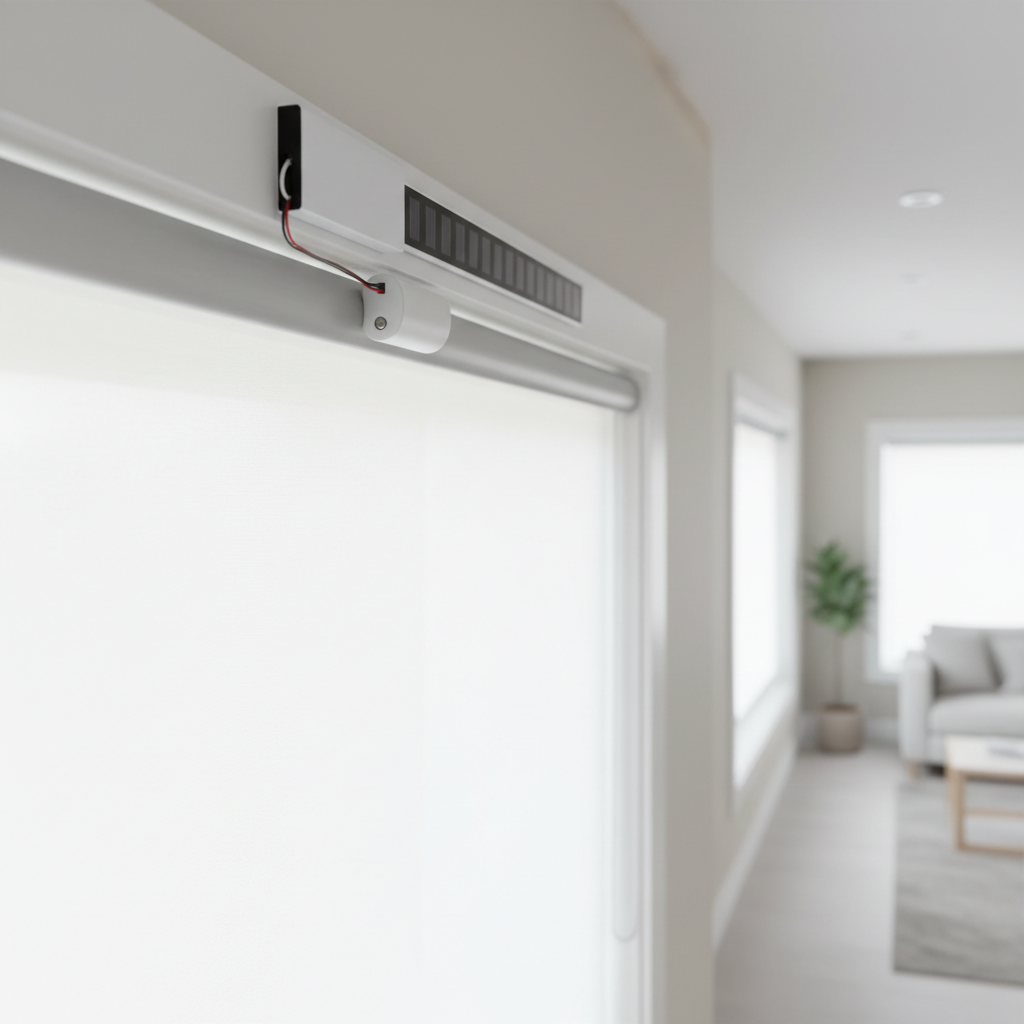
TL;DR
Not sure how to power smart shades? Learn the pros and cons of rechargeable, plug-in, and hardwired motors—plus prewire tips for new builds.
Powering Your Motorized Shades: Battery, Plug-In, or Hardwired? A Planning Guide
Motorized shades are only as good as their power plan. Whether you're retrofitting a finished home or building new, here's how to choose the right setup for reliability, aesthetics, and budget.
Power Options at a Glance
Rechargeable Battery Motors
- •Best for: Most retrofits and standard-size windows
- •Pros: Clean look, no wires; charges typically last weeks to months depending on use
- •Consider: Occasional charging via magnetic or USB cable
Plug-In (Low-Voltage) Motors
- •Best for: Heavier shades or higher daily use when hardwiring isn't practical
- •Pros: No charging; simple to service
- •Consider: Plan outlet placement and cord concealment behind fascias/cassettes
Hardwired Low-Voltage Motors
- •Best for: New builds or remodels; large shades; whole-home systems
- •Pros: Always powered; no batteries or visible cords; central power supply
- •Consider: Coordinate low-voltage wiring during construction
When to Choose Which
- •Few windows, easy access: Rechargeable battery
- •Very tall, wide, or frequently used shades: Plug-in or hardwired
- •New construction or major reno: Hardwired for a "set-and-forget" system
- •High windows you can't reach: Hardwired or plug-in to avoid charging
Prewire Tips for Builders and Remodelers
- •Run 18/2 (or per motor spec) from a central power location to each window headrail
- •Home-run each cable; label clearly by room and window
- •Leave 12–18 inches of slack at the headrail; mount point typically above the trim
- •Ensure a nearby low-voltage power supply location (closet, basement, utility room)
- •Provide 2.4 GHz Wi-Fi coverage near windows for Wi-Fi motors and SmartLife hub placement
Network and Control Basics
- •Works with Alexa, Google Assistant, Apple Home, and the SmartLife app
- •Create wall-mounted remotes or keypads for a "switch-like" feel
- •Set up rooms, groups, and scenes for everyday use and guests
Finish Details That Keep It Tidy
- •Use fabric-wrapped cassettes and fascias to hide motors and wiring
- •Add side channels for blackout rollers to limit light gaps
- •Pair with drapery to conceal heads, brackets, or outlets
Why Carolina Smart Blinds
- •We help you select the right power option for each window
- •Rough-in guidance for builders; retrofit-friendly solutions for finished homes
- •Free measuring, free professional installation, and smart setup/training
- •Most installations in 1–2 days; 1-year warranty for manufacturer defects
Building or retrofitting? Schedule a free consultation—we'll map the best power plan for your shades and provide prewire specs if needed.